Hormonal Beauty: Consumer and Senses
According to grandviewresearch.com the global women’s health market size was valued at USD 38.11 billion in 2021 and is expected to grow at a compound annual growth rate (CAGR) of 4.8% from 2022 to 2030. This market represents a great opportunity for innovation for the cosmetic industry, so it is very important to understand the needs of women at this stage and, above all, what the characteristics of the skin are for the proper formulation of cosmetic products.
Menopause brings with it many insecurities as it usually occurs during the period of life when women play important roles in society. So much so that talking about hormonal changes or menopause has been considered a taboo. At this stage, social, biological and psychological insecurities can be highlighted. There are environmental, lifestyle and genetic factors that also generate different problems during this period. The consumer today is looking for a more open conversation in the search for cosmetic and non-medical solutions that relieve symptoms and help them cope with this stage.
To better understand the Latin American consumer, we have carried out research with 39 users between 18 and 65 years of age in Mexico (Mexico City and Acapulco) and Colombia (Bogota and Barranquilla), using a qualitative methodology of 12 virtual forums made up of triads and whose objective was to understand how these consumers coexist with hormonal cycles. It was found as a main finding that the life of women is linked to their hormones and that thanks to these is that their femininity is defined. We also found that consumers state that their lives are impacted by three great moments; Menstruation, Maternity and Menopause, the latter being one of the ones that has the most impact on them.
Additionally, in the research we identified two profiles of how women in Latin America approach these stages. The first corresponds to “connected women”, who openly talk about how they feel, what they think and how they face the various situations associated with their femininity and their body. These women prioritize everything related to their health and well-being. The second profile is “disconnected women”, who are characterized by reserving their feelings and thoughts related to the different situations around menstruation or menopause. They prioritize their families above them.
These findings open an opportunity for the cosmetic industry to help normalize the physical symptoms that are common in these consumers. For example, “hot flashes”, those abrupt, surprising and uncomfortable changes in temperature, which can be experienced by 75% of women. Cosmetics also have a great opportunity to treat changes in the skin of the face and Zone V, which is perceived as less elastic, thinner and, above all, drier. They also perceive an increase in hair loss and hair fiber thinning that makes them feel insecure, different and vulnerable, which represents a segment to take advantage of in the hair market.
In our study, they also manifested emotional and psychological symptoms such as mood swings that increase sensitivity to any stimulus or even, as they manifest it, “loss of youth”. It is for all this that the stage of menopause turns out to be the most painful and difficult to face, especially for those “disconnected women” who were half of the study panel. For this reason, we see new trends related to cosmetics that provide experiences, improve mood and self-esteem to promote a change of attitude at this stage.
To complement this research, a comprehensive proposal was evaluated in digital environments such as social networks and a landing page, which confirmed that in Latin America there is already a genuine interest among consumers to learn more about this stage, as well as to acquire solutions that are incorporated into a daily routine and that be effective for the symptoms they present, as stated by one of the consumers in Colombia: “I want to know and learn about menopause, especially about products that give me control at this stage of my life”.
In general, it is perceived that consumers feel frustrated because they have looked for different alternatives such as medications, natural products or hormone therapy that have not met their expectations. Additionally, they would like products that understand and accompany them. This study allowed us to identify some needs that are neglected by some brands in Latin America.
The challenge for cosmetic formulators is to integrate these needs with the biochemical changes those hormonal variations produce in the body and the skin, along with new technologies that promote holistic treatment at an emotional, physiological and mental level. Menopause is a stage in a woman’s life in which reproductive capacity ceases and in which many endocrine, biological, and clinical changes occur. Science says that 60% of women experience some symptom.
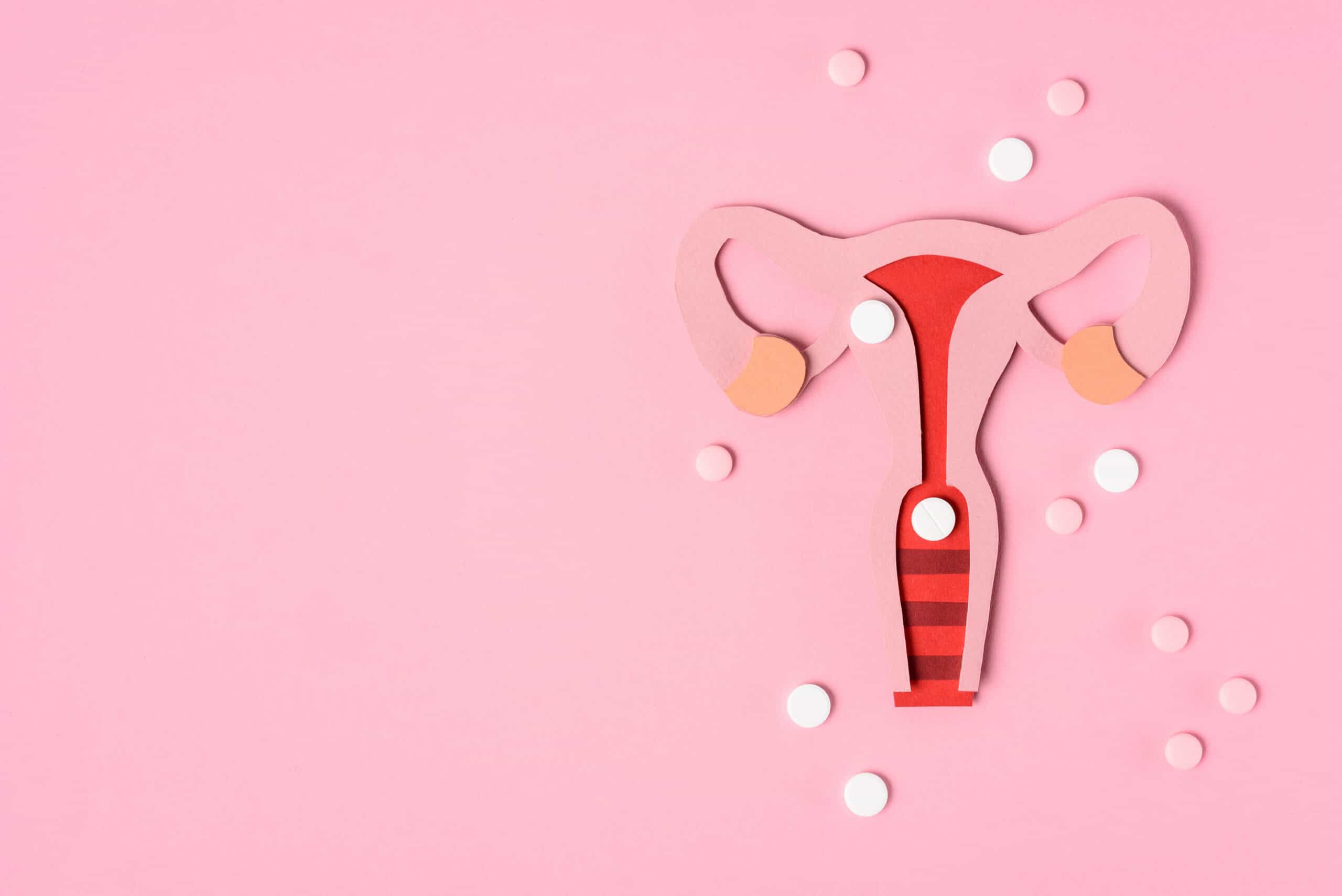
Menopause mainly intervenes in the hypothalamus and the uterus.
Many hormones are involved in its symptoms, such as estradiol, LH, FSH, AMH, Inhibin B and GnRH. There are also variations in other hormones such as androstenedione, SHBG (sex hormone binding globulin), cortisol, norepinephrine, and IGF-1 (insulin-like growth factor 1). During this process there is an increased production of inflammatory mediators, vascular and endothelial reactivity. It is considered that many women live a third of their lives in this period.
Hormonal skin aging coexists with chronological and photoaging, with the menopausal stage being one of the most relevant factors in skin quality. The cosmetic chemists must consider the following factors when designing products. There are very interesting publications, such as a recent article published in Mechanisms of Aging and Development in 2020 by Rheus T et al in which the effects of menopause on the skin are detailed. The ups and downs in the concentration of hormones can improve your appearance or significantly worsen your condition, as well as lead to the appearance of dermatological changes. Estrogen receptors are found on fibroblasts and keratinocytes, thus it has been shown that there is a positive correlation between circulating estrogen levels and the perception of age, attractiveness, radiance and skin health.
Hormonal changes lead to a decrease in collagen content, water content, loss of elasticity and impact on the quality of all skin layers.
The dermis is mainly affected by the reduction in the synthesis of collagen I and collagen III, as well as the alteration in the production of glycosaminoglycans, decreasing the levels of skin hydration. Likewise, it has been found that the estrogen 17-β estradiol plays a protective role in fibroblasts and keratinocytes against oxidative stress, which is altered during the menopausal period, affecting the antioxidant mechanisms of the skin. An interesting study of topical application of β-estradiol showed an increase in the expression of proteins and mRNA of procollagen I, tropoelastin and fibrillin 1 and a reduction in the expression levels of MMP-1, increased proliferation of keratinocytes and improvement in the dermal thickness presenting a potential against the effects of menopause on the skin.
For these reasons, one of the major trends we see in cosmetics are biochemical mechanisms related to skin care treatments that replace estrogen and mechanisms focused on hormone-like benefits. We will see new claims and concepts such as hormonal friendly, hot flashes friendly, immediate refresh and countervailing skin care, among others.

John Jiménez
John Jiménez is currently Senior Researcher at Belcorp Colombia. He is a Pharmacist (National University of Colombia) with a Master degree in Sustainable Development (EOI Business School, Madrid) and specialization studies in Marketing, Cosmetic Science and Neuromarketing. John has 28 publications in scientific journals and a book chapter in cosmetic formulation.
Maison G de Navarre Prize (IFSCC 2004), Henry Maso Award (IFSCC 2016) and best scientific papers at Colamiqc Ecuador 2009, Colamiqc Brazil 2013 and Farmacosmética Colombia 2014. He has been a speaker at various international conferences in Europe and Latin America and was President of Accytec Bogotá from 2017–2019.