
Emotions and Neuromarketing
Now that you are reading this column, I invite you to think about your favorite perfume. What perfume did you apply this morning? Focus on the sensations that this perfume produces in you when you apply it and also, on what you feel when other people around you perceive it and give you good comments. Wearing a perfume is rewarding for many reasons. In my opinion, I feel that perfume, as well as some cosmetic products, are basic for human beings and we like to use them because they give us moments of gratifi- cation. What do we feel when buying our favorite perfume?
Science says that our behavior is driven by a series of feelings and emotions, some of which are only partially accessible to our awareness. Most of our purchasing decisions and behavior as consumers are guided by emotions. The shopping experience is based on the search for positive emotions.
The market is saturated with advertising stimuli, where hundreds of brands constantly bombard us. Marketing has determined that 80% of purchases are made impulsively and therefore knowing how we can assess emotions through neuromarketing is essential to create and guarantee different user experiences and better un- derstand the purchase decision. Therefore, the neurological purchase decision is explained with the following equation:
Net Perceived Value (NPV) = Reward – Pain
For a product or service to be successful, the NPV value must be high, which implies high reward and low pain. The reward is related to the emotions that said product or service generates. A customer might buy the latest iPhone for its functionality, while to someone else that phone might be a status symbol. The chal- lenge of neuromarketing is to discover, understand and measure these feelings. Regarding pain, this value should be as low as possible, so that NPV value is high.
This formula partly explains why some luxury cosmetic products are successful, as they provide a high reward, which increases the NPV. The higher the price paid, the more pain. But if the reward is high, the NPV increases. So, the consumer’s brain looks for ways to increase the reward and this is why sensory perception is so critical and important in cosmetics. On the other hand, in the bibliography we see very interesting studies on what happens with the sensory perception of products, when the price is modified. In some cases, the price variation is reflected in an increase in the reward and therefore in the perceived net value.
Psychology has identified six basic emotions for the human being: surprise, happiness, fear, sadness, anger and disgust. These emotions are immediate adaptive chemical and neuronal responses to the environment. Thanks to emotions, we can describe an object or an experience as positive (pleasant) or negative (unpleasant). Pleasure is a nice experience that arises from an anticipated or real satisfaction of a desire or need. Some pleasure activities are reading, music, sex, learning, teaching, experiencing fragrances and cosmetics… Pleasure can be measured through quantifying emotions, using neuroscience and psychology.
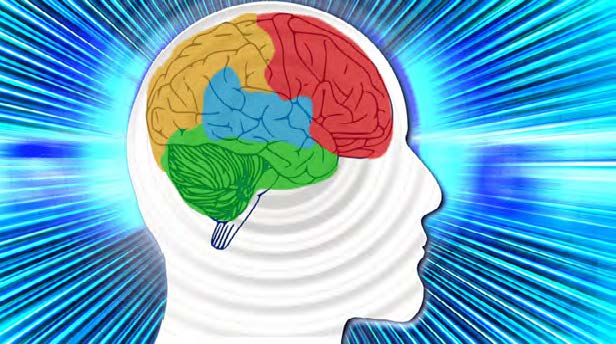
One of the key brain regions involved in detecting emotion, particularly fear, is the amygdala. The amygdala is an almond-shaped structure in the brain. This structure is located near the hippocampus, in the frontal portion of the temporal lobe. It is essential for developing the ability to feel certain emotions, especially fear, and for perceiving emotions in other people. In fact, the amygdala seems to modulate all our reactions to events that are very important to our survival. The events that warn us of imminent danger are therefore very important stimuli for the amygdala, but so are signals related to the provocation of certain foods, sexual partners, children in distress, and cosmetic stimuli such as textures, fragrances, etc.
Therefore, our decisions as consumers are mainly based on the emotions that the products we buy arouse in us. We cannot exclude the impact of emotions on purchase decisions since they are often the main explanatory component of this process, as explained by the neurological purchase decision equation. The affective component is based on conscious feelings, and these in turn on emotions, which are physiological responses of an automatic nature and of which the consumer is unaware.
We are close to 2023 and specialized portals such as puromarketing.com are beginning to present the trends that will be the prota- gonists next year. The new reality that we are living in this post- pandemic world is related to the economic crisis, war, inflation, stress and anxiety. For this reason, the projections indicate that the consumer trends that will mark 2023 are related to emotions and here companies have a great opportunity for innovation:
- Consumer loyalty will be earned through personal connections, not effectiveness.
- People are likely to increase brand switching as consumer pa- tience runs out for the new reality.
Unstructured feedback will gain importance when it comes to understanding the changing needs of the consumer. Companies will do more to listen to people’s comments on social media so they can respond in real time. The analysis of the types of comments allows to identify opportunities to introduce changes that benefit all consumers.
On the other hand, at the last IFSCC in London, in last October, different papers of neuroscience application in cosmetics and that are related to emotions were presented. In a study, a group of researchers identified two formulations of facial cleanser, which activated the pleasure center in the brain during the use experi- ence, which opens the doors to a new way of evaluating facial care routines through this kind of techniques. In another interesting study, the authors designed a methodology that facilitates the characterization of soundtracks that correspond cross-modally with particular sensations associated with freshness in fragrances. In the conclusions it is mentioned that sounds related to woodwind and piano instruments, low tempo, and legato articulation trigger sensations associated with freshness (humidity, open air, lightness, softness, and calm).
Emotions are key to the future of the cosmetics industry and neuromarketing is a fundamental tool to understand them. In the coming years we will see algorithms and applications that will allow us to predict the emotion that a consumer feels thanks to all the advances in AI, IOT, AR and VR. As mentioned by the ana- lyticsinsight.net portal, one of the current trends is Emotional Artificial Intelligence. This technology has vast potential to build better human-machine interactions and can be used in different industries and sectors. Emotional AI uses machine learning to monitor, analyze, interpret, record, and even, in some cases, predict human emotions. This market was worth U$ 22.3 billion in 2021 and has a projected value of U$ 49.6 billion by 2030, with a CAGR of 12.1% in this period, which represents a great opportunity for innovation for our industry. One of the great challenges we have in the cosmetics industry is to better understand the emotions generated by the products we design. This will allow us to create more and more surprising cosmetic experiences.

John Jiménez
John Jiménez is currently Senior Researcher at Belcorp Colombia. He is a Pharmacist (National University of Colombia) with a Master degree in Sustainable Development (EOI Business School, Madrid) and specialization studies in Marketing, Cosmetic Science and Neuromarketing. John has 28 publications in scientific journals and a book chapter in cosmetic formulation.
Maison G de Navarre Prize (IFSCC 2004), Henry Maso Award (IFSCC 2016) and best scientific papers at Colamiqc Ecuador 2009, Colamiqc Brazil 2013 and Farmacosmética Colombia 2014. He has been a speaker at various international conferences in Europe and Latin America and was President of Accytec Bogotá from 2017–2019.